Growing Guide

What actually works, growing in East Tennessee.

A planting calendar built for Greene County's climate, and an honest look at the challenges that come with it. Not a generic zone chart. What we actually plan around.

Zone 7aUSDA Hardiness, Greeneville
~Apr 15Average last spring frost
~Oct 20Average first fall frost
~190 daysTypical growing season
Greene County

Farming here isn’t new.

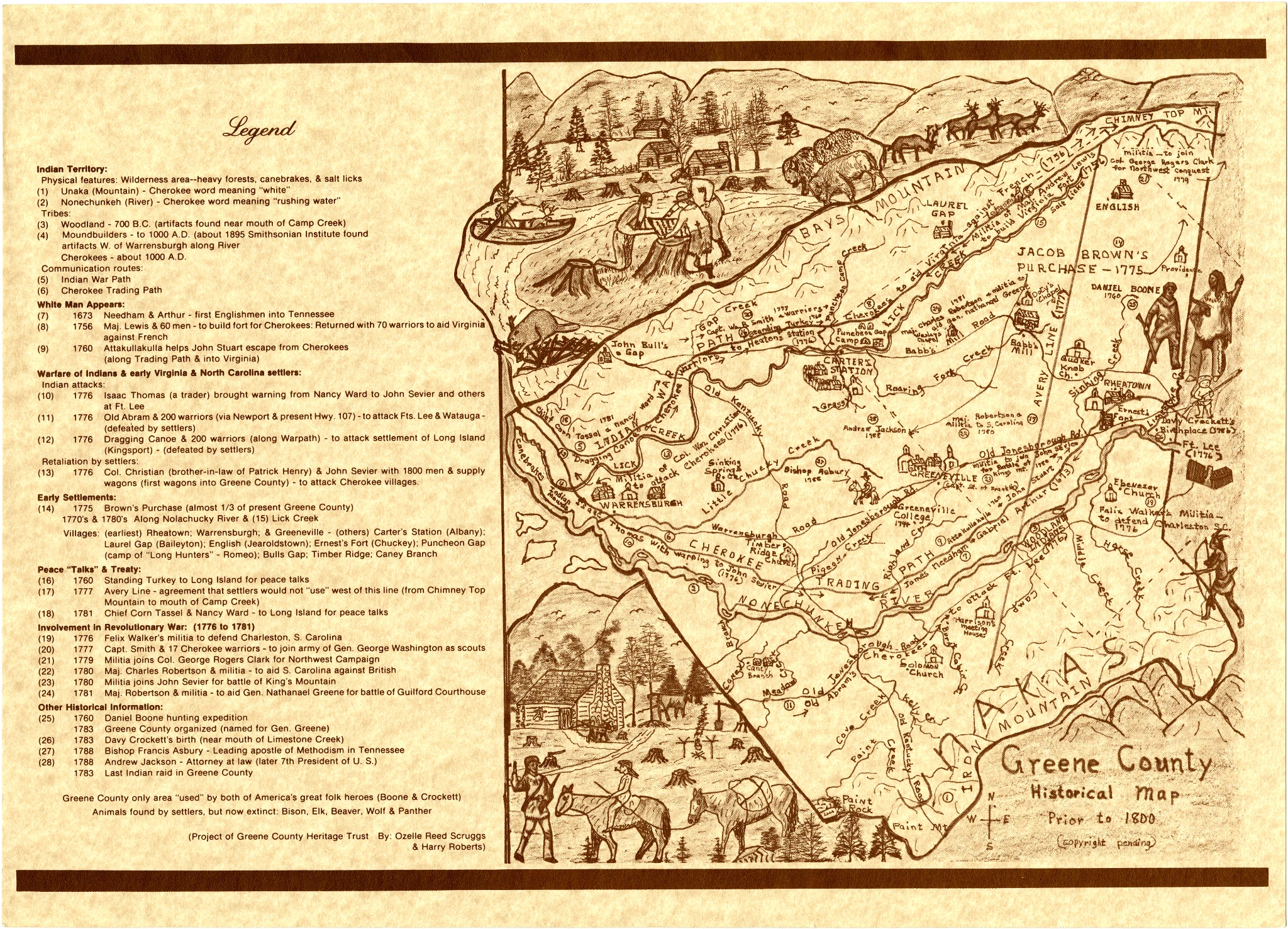
People have been growing food in this valley, between the Bays Mountains and the Nolichucky, for a very long time. This historical county map shows Greeneville, the Nolichucky River, early routes, and surrounding settlements prior to 1800, the same valley and watersheds we’re working with today.

See the full county history & cash crop timeline →

Historical map of Greene County, Tennessee prior to 1800, showing Greeneville, the Nolichucky River, early routes, settlements, and mountain gaps
Planting calendar

Tap a date, get a reminder.

Each row shows the next occurrence of that planting window. Add it straight to Google Calendar, or download an .ics file that works with Apple Calendar, Outlook, and most other calendar apps on iOS and Android. Reminders repeat every year.

Bare-root fruit trees & berriesPlant while dormantLate winter, before bud break: the window we used for our own orchard.
PeppersStart seeds indoors8–10 weeks before last frost. Peppers are slow to germinate, so start early.
TomatoesStart seeds indoors6–8 weeks before last frost.
Spring lettuce & greensDirect sow4–6 weeks before last frost. Tolerates a light frost fine.
TomatoesTransplant outdoorsAfter last frost, once soil has warmed.
Cucumbers & squashDirect sow or transplantWait until all frost danger has passed.
Basil & tender herbsTransplant outdoorsA late frost will kill basil overnight.
PeppersTransplant outdoorsWait for soil to hit 65°F or warmer.
MelonsDirect sow or transplantNeeds warm soil and consistent moisture.
OkraDirect sowNeeds soil at 65°F+ to germinate well.
Fall greens (kale, collards)Direct sowFor a fall and early-winter harvest.
GarlicPlant clovesEarly October, before the ground cools too far.

Dates are averages for Zone 7a in Greeneville, TN. Always check the current forecast before planting frost-sensitive crops. A 30% chance of frost still means a real chance.

The full list

130+ crops grown across Northeast Tennessee.

Everything below is realistic for a Zone 6b/7a garden in this part of the state, whether or not it's in our own beds yet. Filter by season to see what should be going in the ground right now, or browse the whole list by category.

Showing 136 of 136 crops.

Berries & Vines

BlueberriesDormant SeasonBlackberriesDormant SeasonRaspberriesDormant SeasonStrawberriesEarly SpringTable GrapesDormant SeasonMuscadine GrapesDormant SeasonElderberriesDormant SeasonCurrantsDormant SeasonGooseberriesDormant Season

Flowers & Pollinator Plants

MarigoldsLate SpringZinniasLate SpringSunflowersLate SpringNasturtiumsLate SpringCalendulaEarly SpringCosmosLate SpringBorageSpringDahliasSpring

Fruit Trees

ApplesDormant SeasonPearsDormant SeasonPeachesDormant SeasonPlumsDormant SeasonSweet CherriesDormant SeasonTart CherriesDormant SeasonFigsDormant SeasonPawpawsDormant SeasonAmerican PersimmonsDormant SeasonMulberriesDormant SeasonQuinceDormant SeasonPomegranateDormant Season

Herbs

Sweet BasilLate SpringThai BasilLate SpringCilantroEarly SpringFlat-Leaf ParsleyEarly SpringCurly ParsleyEarly SpringDillSpringChivesSpringGarlic ChivesSpringOreganoSpringThymeSpringRosemarySpringSageSpringMintSpringLemon BalmSpringTarragonSpringMarjoramSpringLavenderSpringSteviaLate SpringLemongrassLate SpringCatnipSpring

Leafy & Cooking Greens

Leaf LettuceEarly SpringRomaine LettuceEarly SpringButterhead LettuceEarly SpringSpinachEarly SpringSwiss ChardEarly SpringKaleEarly SpringCollard GreensEarly SpringMustard GreensEarly SpringTurnip GreensEarly SpringArugulaEarly SpringBok ChoyEarly SpringNapa CabbageEarly SpringGreen CabbageEarly SpringRed CabbageEarly SpringBroccoliEarly SpringCauliflowerEarly SpringBrussels SproutsSummerKohlrabiEarly SpringRadicchioFallEndiveFallEscaroleFallMizunaEarly SpringTatsoiFallWatercressSpringSorrelSpringCeleryLate WinterBulb FennelSpring

Nuts

PecansDormant SeasonBlack WalnutsDormant SeasonHazelnutsDormant SeasonChestnutsDormant Season

Root Vegetables & Alliums

Irish PotatoesEarly SpringCarrotsEarly SpringBeetsEarly SpringRadishesEarly SpringDaikon RadishFallTurnipsEarly SpringRutabagaFallParsnipsEarly SpringOnions (from sets)Early SpringOnions (from seed)Late WinterSweet OnionsEarly SpringGarlicDormant SeasonShallotsDormant SeasonLeeksLate WinterGreen Onions / ScallionsEarly SpringJerusalem Artichokes (Sunchokes)SpringHorseradishSpringAsparagusDormant SeasonRhubarbDormant Season

Vegetables

Slicing TomatoesLate SpringCherry TomatoesLate SpringRoma / Paste TomatoesLate SpringBell PeppersLate SpringJalapeño PeppersLate SpringBanana PeppersLate SpringPoblano PeppersLate SpringHabanero PeppersLate SpringCayenne PeppersLate SpringEggplantLate SpringOkraLate SpringSlicing CucumbersLate SpringPickling CucumbersLate SpringZucchiniLate SpringYellow Summer SquashLate SpringButternut SquashLate SpringAcorn SquashLate SpringSpaghetti SquashLate SpringPumpkinsLate SpringWatermelonLate SpringCantaloupeLate SpringHoneydew MelonLate SpringBush Green BeansLate SpringPole Green BeansLate SpringLima BeansLate SpringSouthern Peas (Field Peas)SummerEdamame (Soybeans)Late SpringSweet CornLate SpringPopcornLate SpringPeanutsLate SpringTomatillosLate SpringGround CherriesLate SpringSweet PotatoesLate SpringEnglish PeasEarly SpringSnap PeasEarly SpringSnow PeasEarly SpringFava BeansEarly Spring
Challenges & mitigation

What actually goes wrong here, and what we do about it.

East Tennessee is a good place to grow, but it's not an easy one. Here's what we plan around, prevent where we can, and rebuild from when we can't.

High risk

Predators

Raccoons, opossums, and foxes are relentless once they find a weak point in a coop or hutch, and they'll test fencing and latches repeatedly. We learned this one the hard way this season.

Mitigation
  • Hardware cloth, not chicken wire, buried 12″ deep and turned outward
  • Locking latches raccoons can't work open with paws that function almost like hands
  • Motion-sensor lighting near housing
  • No pet food or fallen fruit left out overnight
  • Rebuild and predator-proof fully before restocking, don't rush it
High risk

Deer pressure

Greene County has heavy deer traffic, and they'll browse fruit tree leaders, berry canes, and garden beds right down to the ground overnight.

Mitigation
  • 7–8 ft. fencing, or a shorter double-fence deer can't judge the jump on
  • Deer-resistant plantings (herbs, alliums) along the perimeter
  • Repellent sprays, rotated so deer don't get used to one scent
  • Tree tubes or netting on young fruit trees for the first few years
Medium risk

Heavy clay soil

East Tennessee's red clay compacts easily, drains slowly, and runs acidic, which is hard on root vegetables and anything that hates wet feet.

Mitigation
  • Raised beds and containers filled with real growing mix, our main strategy
  • Heavy compost and organic matter worked into any in-ground beds
  • A UT Extension soil test before amending blind
  • Gypsum to help break up compaction over time
High risk

Humidity & fungal disease

Tomato blight and powdery mildew move fast in a humid East Tennessee summer, especially once plants get crowded and airflow drops.

Mitigation
  • Wide plant spacing for airflow, even when it feels wasteful early on
  • Drip irrigation at soil level instead of overhead watering
  • Water in the morning so foliage dries by evening
  • Pull and dispose of infected leaves immediately, don't compost them
  • Rotate crop families bed to bed each year
Medium risk

Late spring frost swings

A warm stretch in early April can trick you into planting too early. Clear, calm nights right after can still radiate enough heat to frost tender starts even when the forecast low looks safe.

Mitigation
  • Keep frost cloth or row cover on hand through early May
  • Watch overnight lows closely, not just the daytime forecast
  • Hold tender transplants (tomatoes, peppers, basil) until after the average last frost date, not the first warm week
Medium risk

Summer heat & drought stress

July and August heat can stall fruit set on tomatoes and peppers and push cool-season greens to bolt fast.

Mitigation
  • Heavy mulch to hold soil moisture and moderate root temperature
  • Consistent deep watering over frequent shallow watering
  • Shade cloth over greens during the hottest stretch
Medium risk

Groundhogs & rabbits

Groundhogs can flatten a row of beans or greens in a single evening, and rabbits go straight for tender new transplants before they've had a chance to establish.

Mitigation
  • Fencing buried a few inches down, since groundhogs dig under a simple perimeter
  • A hot wire at ground level along the fence line for persistent diggers
  • Row cover on new transplants until they're established and less tempting
  • Clearing brush piles nearby that make good groundhog denning spots
High risk

Japanese beetles & squash bugs

Japanese beetles show up by the hundreds in midsummer and skeletonize leaves fast, while squash bugs can take out a whole zucchini or squash planting from the base up.

Mitigation
  • Hand-picking into soapy water in the cool of the morning, when beetles are sluggish
  • Row cover on squash family plants until they flower and need pollinator access
  • Checking the undersides of squash leaves for egg clusters and scraping them off
  • Pulling and destroying badly infested plants rather than letting them seed the next generation
Medium risk

Weed pressure

Warm, humid summers mean weeds establish fast, and in containers and raised beds they compete hard with young plants for the limited soil volume available.

Mitigation
  • Mulch on every bed and container, which does most of the work on its own
  • Weeding little and often instead of letting it pile up into a weekend project
  • Landscape fabric on the walking paths between beds
  • Pulling weeds before they set seed, especially in the paths where they spread easiest
Medium risk

Storm damage & wind

East Tennessee gets its share of strong summer thunderstorms, and tall crops like tomatoes, okra, and young trees take the brunt of it.

Mitigation
  • Sturdy staking and cages installed at planting time, not after a plant is already leaning
  • Support stakes on containers, which can tip in wind more easily than in-ground beds
  • Windbreak plantings on the exposed side of the garden
  • Checking ties and stakes after any significant storm rather than assuming they held
Medium risk

Blossom end rot

Tomatoes and peppers both get it here, a sunken, dark patch on the bottom of the fruit caused by inconsistent watering interrupting calcium uptake, not usually a soil calcium problem itself.

Mitigation
  • Consistent watering on a schedule rather than letting containers dry out between waterings
  • Mulch to even out soil moisture swings between waterings
  • Avoiding heavy nitrogen fertilization early, which pushes leafy growth over root development
  • Accepting the first few fruits may show it while watering rhythm gets dialed in for a new bed